canon in d pachelbel piano sheet music pdf
Canon in D by Pachelbel: A Comprehensive Guide to Piano Sheet Music (PDF)
Discover readily available PDF and MIDI sheet music for Pachelbel’s iconic Canon in D‚ suitable for piano solo or multiple instruments‚ offering diverse arrangements.
Historical Context of the Canon in D
Pachelbel’s Canon in D‚ originally titled Canon and Gigue in D major‚ wasn’t widely known during his lifetime. Composed around 1680‚ it resided within a larger set of 24 canons‚ intended as pedagogical material for violin students. The piece’s structure‚ a repeating bassline – the ostinato – over which melodic variations unfold‚ was a common Baroque technique.
Its resurgence began in the 20th century‚ fueled by its inclusion in popular culture and arrangements for various instruments‚ including the piano. The availability of sheet music‚ initially through transcriptions and later as digital PDFs‚ played a crucial role in its widespread adoption. The simplicity of the harmonic progression and the elegant melodic lines contributed to its enduring appeal‚ transforming it from a relatively obscure Baroque composition into a globally recognized masterpiece.
Johann Pachelbel: Composer Biography
Johann Pachelbel (1653-1706) was a German composer‚ organist‚ and teacher of the Baroque period. Though overshadowed by contemporaries like Bach and Handel for centuries‚ his influence is now widely recognized. He held various musical positions throughout his life‚ including court organist in Stuttgart and Kapellmeister in Nuremberg.

Pachelbel’s compositional output was extensive‚ encompassing organ works‚ choral music‚ and chamber pieces. While not initially celebrated for his Canon in D‚ his legacy extends far beyond this single piece. The increasing accessibility of his sheet music‚ particularly in PDF format‚ has allowed modern musicians to explore the breadth of his work. His contributions to harmonic progression and counterpoint significantly impacted subsequent composers‚ solidifying his place in musical history‚ even if belatedly acknowledged.
Understanding the Structure of the Canon
Pachelbel’s Canon in D is a remarkable example of contrapuntal writing‚ built upon a repeating bass line – an ostinato – over which melodic lines enter sequentially‚ imitating each other. This creates a rich‚ layered texture. Examining piano sheet music reveals the interplay of these voices‚ often presented in a polyphonic arrangement.
The structure isn’t simply a strict canon; variations and embellishments are subtly woven in. Understanding this layering is crucial when learning the piece. PDF versions of the sheet music often highlight these individual melodic lines. The harmonic foundation‚ derived from the ostinato‚ provides a stable base for the evolving melodic interplay‚ making it a captivating piece for both performance and analysis.
The Canon’s Popularity and Modern Usage
Pachelbel’s Canon in D enjoys enduring popularity‚ transcending classical music circles and permeating modern culture. Its recognizable harmonic progression and serene melody make it a frequent choice for weddings‚ films‚ and various arrangements. The availability of piano sheet music in PDF format has further fueled its accessibility for musicians of all levels.
Beyond traditional performances‚ the Canon inspires countless remixes and reinterpretations across genres. From pop music samples to electronic dance music adaptations‚ its core structure provides a versatile foundation. Finding sheet music allows musicians to explore these modern interpretations or create their own‚ demonstrating the piece’s lasting influence and adaptability in contemporary musical landscapes.
Finding Canon in D Piano Sheet Music (PDF)
Locate free PDF scores and premium options online‚ catering to diverse skill levels‚ for playing Pachelbel’s Canon in D on the piano easily.
Free PDF Sheet Music Sources
Numerous online platforms offer complimentary PDF sheet music for Pachelbel’s Canon in D‚ making this timeless piece accessible to all pianists. Websites like Truongos.com and the Music Theory Academy provide downloadable scores‚ often including arrangements for varying skill levels. These resources frequently feature simplified versions for beginners alongside more complex interpretations.
However‚ it’s crucial to exercise caution when downloading from free sources. Verify the website’s legitimacy and scan downloaded files for potential malware. Some sites may offer incomplete or inaccurate transcriptions. Exploring online music communities and forums can also lead to shared sheet music‚ but always respect copyright regulations. Remember to check for proper attribution and licensing before using or distributing any downloaded material. Utilizing these free resources allows aspiring pianists to embark on their musical journey with Pachelbel’s masterpiece without financial constraints.
Paid Sheet Music Options and Websites
For pianists seeking high-quality‚ professionally arranged sheet music of Pachelbel’s Canon in D‚ several reputable websites offer paid options. Digital print services provide instant access to PDF downloads‚ ensuring accurate transcriptions and clear notation. These platforms often feature a wider selection of arrangements‚ catering to diverse skill levels and instrumentation – including flute and piano versions.
Purchasing sheet music guarantees a reliable and legally compliant source‚ supporting composers and publishers. Websites specializing in sheet music sales typically offer previews‚ allowing you to assess the arrangement before committing to a purchase. While requiring an investment‚ paid options often include additional features like practice tracks and performance notes. This ensures a more comprehensive learning experience and a polished final performance of this beloved classical piece. Consider exploring these avenues for a premium musical resource.
Sheet Music Difficulty Levels: Beginner‚ Intermediate‚ Advanced
Pachelbel’s Canon in D sheet music is available across a spectrum of difficulty levels‚ catering to pianists of all abilities. Beginner arrangements simplify the harmonic structure and melodic lines‚ often focusing on the core progression with minimal ornamentation. Intermediate versions introduce more complex fingerings‚ fuller chords‚ and a greater emphasis on dynamics‚ demanding increased coordination.
Advanced arrangements present the complete polyphonic texture of the original canon‚ requiring a strong understanding of music theory and advanced piano technique. These often include intricate embellishments and challenging rhythmic patterns. When selecting sheet music‚ carefully assess your current skill level to ensure a rewarding learning experience. Starting with an easier arrangement and gradually progressing is recommended for optimal development. Consider arrangements specifically labeled as “Easy Piano” for a gentler introduction.
Arrangements for Different Piano Skill Levels
Canon in D sheet music offers diverse arrangements tailored to varying piano proficiencies; Beginner pianists can find simplified versions focusing on the main melody and basic chord progressions‚ ideal for building foundational skills. Intermediate players benefit from arrangements incorporating fuller harmonies‚ more complex rhythms‚ and introductory countermelodies‚ enhancing coordination.
Advanced pianists can explore arrangements replicating the original’s intricate polyphony‚ demanding precise fingerwork and musical interpretation. Furthermore‚ arrangements exist for flute and piano duets‚ expanding performance possibilities. Digital prints cater to solo piano‚ while some PDFs include arrangements for multiple instruments. Selecting an arrangement aligned with your skill level ensures a fulfilling musical journey‚ fostering growth and enjoyment of this timeless piece.
Decoding Pachelbel’s Canon Sheet Music
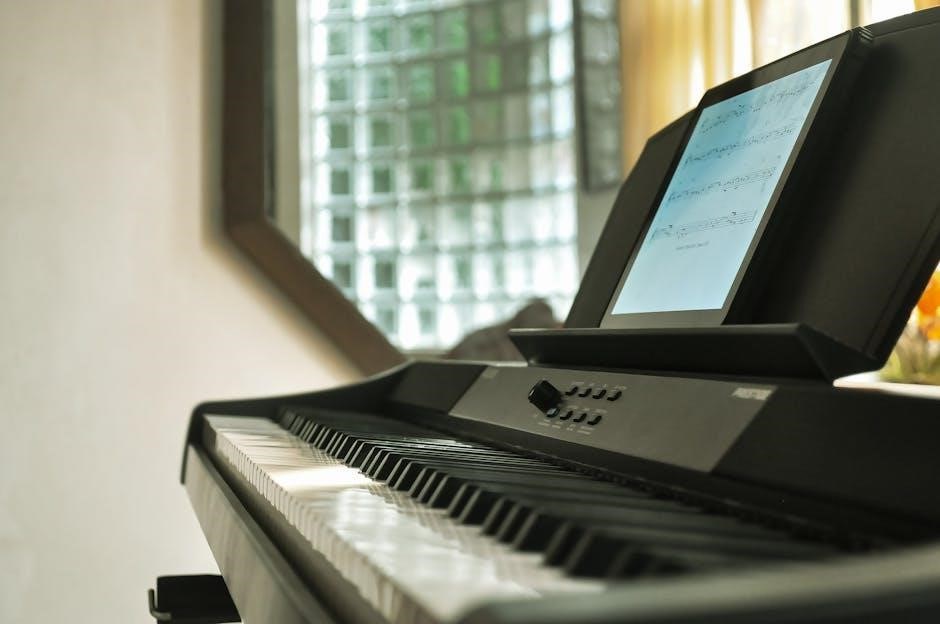
Understanding the PDF sheet music reveals a Larghetto tempo‚ key of D major‚ and polyphonic texture‚ demanding careful attention to bass lines and symbols.
Key Signature and Time Signature Explained
Pachelbel’s Canon in D is primarily written in the key of D major‚ indicated by two sharps in its key signature – F# and C#. This means all F and C notes throughout the piece are played as F# and C#‚ respectively‚ unless otherwise altered by accidentals. The time signature is commonly 3/4‚ signifying three quarter notes per measure‚ creating the piece’s characteristic flowing rhythm.
When examining piano sheet music PDF versions‚ observe how these elements influence the notation. The sharps will be consistently present on the staff‚ and you’ll notice the rhythmic emphasis on every third beat. Understanding this foundational aspect is crucial for accurate interpretation. Some arrangements might transpose the piece to different keys‚ so always verify the key signature at the beginning of the sheet music. Recognizing these elements unlocks a deeper comprehension of the musical structure.
Understanding the Bass Line (Ostinato)
Pachelbel’s Canon in D is famously built upon a repeating bass line‚ known as an ostinato. This harmonic foundation consists of a sequence of chords – D‚ A‚ Bm‚ F#m‚ G‚ D‚ G‚ A – played continuously throughout the piece. When studying piano sheet music PDF versions‚ pinpoint this repeating pattern in the lower register. It’s the bedrock upon which the melodic variations are layered.
Mastering the ostinato is vital for performing the Canon. Practice it separately with your left hand until it becomes automatic. Notice how the chords create a harmonic progression that supports the upper melodic lines. Many piano arrangements simplify the ostinato for beginner levels‚ while more advanced versions maintain the original complexity. Identifying and internalizing this bass line is key to unlocking the piece’s beauty and structure.
Reading the Canon’s Polyphonic Texture
Pachelbel’s Canon in D is a prime example of polyphony – music with multiple independent melodic lines occurring simultaneously. When examining piano sheet music PDFs‚ observe how each voice enters sequentially‚ imitating the initial melody at specific intervals. This creates a rich‚ interwoven texture that distinguishes the Canon.
Deciphering this texture requires careful attention to voice leading. The sheet music will often indicate different voices with distinct stem directions or colors. Practice isolating each melodic line individually before attempting to play them together. Understanding how these lines interact – their entrances‚ imitations‚ and harmonic relationships – is crucial for a nuanced performance. Advanced arrangements may present a more complex polyphonic landscape‚ demanding precise coordination and clarity from the pianist.
Common Symbols and Markings in the Sheet Music
When navigating Canon in D piano sheet music PDFs‚ familiarity with standard musical symbols is essential. Expect to encounter dynamic markings (p‚ f‚ mf) indicating volume levels‚ and tempo markings like “Larghetto” specifying the speed. Slurs and ties connect notes‚ influencing phrasing and duration.
Accidentals (sharps‚ flats‚ naturals) alter pitch‚ while repeat signs and codas guide the musical form. Pay close attention to fingerings suggested by the arranger‚ especially in more complex passages. Articulation markings – staccato‚ legato – shape the character of each note. Understanding these symbols unlocks the composer’s intentions and ensures an accurate and expressive interpretation of this beloved piece. Consistent symbol recognition enhances your reading fluency.
Tips for Learning Canon in D on Piano
Master the repeating bass line (ostinato) first‚ then gradually add the melodic layers‚ focusing on hand coordination and maintaining a consistent‚ flowing tempo.
Fingerings and Hand Positioning
Achieving a smooth and articulate performance of Pachelbel’s Canon in D relies heavily on thoughtful fingerings and proper hand positioning. Begin by carefully analyzing the sheet music‚ identifying repeating patterns and challenging passages. Utilize fingerings that prioritize comfort and efficiency‚ minimizing unnecessary hand movement.
For the ostinato bass line‚ consider a consistent fingering pattern to build muscle memory. In the right hand‚ focus on clear articulation of the melodic lines‚ employing finger substitutions where needed to avoid awkward stretches. Maintain a relaxed wrist and curved fingers to promote fluidity.
Experiment with different fingerings to discover what feels most natural for your hand size and technique. Remember‚ the goal is to create a seamless and expressive interpretation of this beloved classic‚ and strategic fingerings are crucial to achieving that.
Practicing the Ostinato Pattern
Mastering the foundational ostinato pattern is paramount when learning Pachelbel’s Canon in D. Dedicate focused practice sessions solely to this repeating bass line‚ initially at a very slow tempo. Ensure each note is played with consistent timing and even dynamics‚ building a solid rhythmic foundation.
Isolate the left hand and practice the pattern until it becomes automatic‚ minimizing conscious effort. Gradually increase the tempo‚ maintaining accuracy and control. Once comfortable‚ begin to coordinate the right hand‚ adding the melodic lines slowly and deliberately.
Utilize a metronome to reinforce precise timing and identify any inconsistencies. Consistent‚ deliberate practice of the ostinato will unlock the harmonic structure and allow for a more expressive performance.
Developing Coordination Between Hands
Achieving seamless coordination between hands is crucial for a fluid rendition of Pachelbel’s Canon in D. Begin by practicing very slowly‚ focusing on synchronizing the left-hand ostinato with the right-hand melodic entries. Isolate small sections‚ repeating them until both hands move together effortlessly.
Employ rhythmic variations – slightly emphasizing one hand over the other – to enhance awareness of interplay. Gradually increase the tempo‚ maintaining precision and avoiding rushing. Visualize the music as a unified whole‚ rather than separate parts.
Consider using practice techniques like “shadowing‚” where you play one hand while silently fingering the other‚ building neural pathways for coordinated movement. Patience and consistent‚ deliberate practice are key to mastering this challenging aspect.
Maintaining Tempo and Dynamics
Preserving a consistent tempo is vital for the Canon in D’s hypnotic effect; utilize a metronome during practice‚ starting slowly and gradually increasing speed. Pay close attention to the Larghetto tempo marking‚ aiming for a graceful and unhurried pace.
Dynamics add emotional depth. While often played softly‚ subtle crescendos and diminuendos enhance the musicality. Observe dynamic markings in the sheet music‚ or experiment with your own interpretations‚ ensuring they complement the canon’s flowing structure.
Avoid abrupt changes; transitions should be smooth and organic. Record yourself playing to identify inconsistencies in tempo or dynamics‚ refining your performance through focused repetition and mindful listening.

Variations and Arrangements Beyond the Original
Explore diverse arrangements of the Canon in D‚ including versions for multiple instruments‚ modern remixes‚ and adapted piano sheet music PDFs.
Canon in D for Multiple Instruments
Pachelbel’s Canon in D transcends solo performance‚ flourishing beautifully in ensemble settings. Numerous arrangements cater to diverse instrumental combinations‚ readily available as PDF sheet music. You’ll find versions scored for string quartets – mirroring the original’s intended texture – alongside adaptations for flute trios‚ chamber orchestras‚ and even larger ensembles.
These arrangements often maintain the core harmonic progression and melodic contour while distributing the iconic bass line (ostinato) and canonized melodies amongst the various instruments. Searching online databases reveals PDF scores for violin‚ cello‚ guitar‚ and piano combinations. Some arrangements simplify parts for student ensembles‚ while others offer more complex‚ virtuosic interpretations. The document containing musical notation for Canon in D is often written for multiple voices‚ showcasing its adaptability. Finding a suitable arrangement depends on your ensemble’s instrumentation and skill level‚ with many free and paid options available online.
Modern Interpretations and Remixes
Pachelbel’s Canon in D has experienced a remarkable resurgence through modern interpretations and remixes‚ extending far beyond traditional classical performance. While original PDF sheet music remains popular for purists‚ contemporary artists have reimagined the canon across genres – from pop and electronic dance music to jazz and even hip-hop.
These remixes often sample the iconic chord progression or melodic fragments‚ layering them with new beats‚ instrumentation‚ and harmonic textures. Finding sheet music for these arrangements can be more challenging‚ often existing as lead sheets or simplified piano transcriptions rather than fully orchestrated PDF scores. Many arrangements are available as MIDI files for digital production. The enduring appeal of the canon lies in its harmonic simplicity and emotional resonance‚ making it a fertile ground for creative exploration. These modern takes demonstrate the timeless quality of Pachelbel’s masterpiece‚ continually inspiring new generations of musicians.