pentax me super user manual
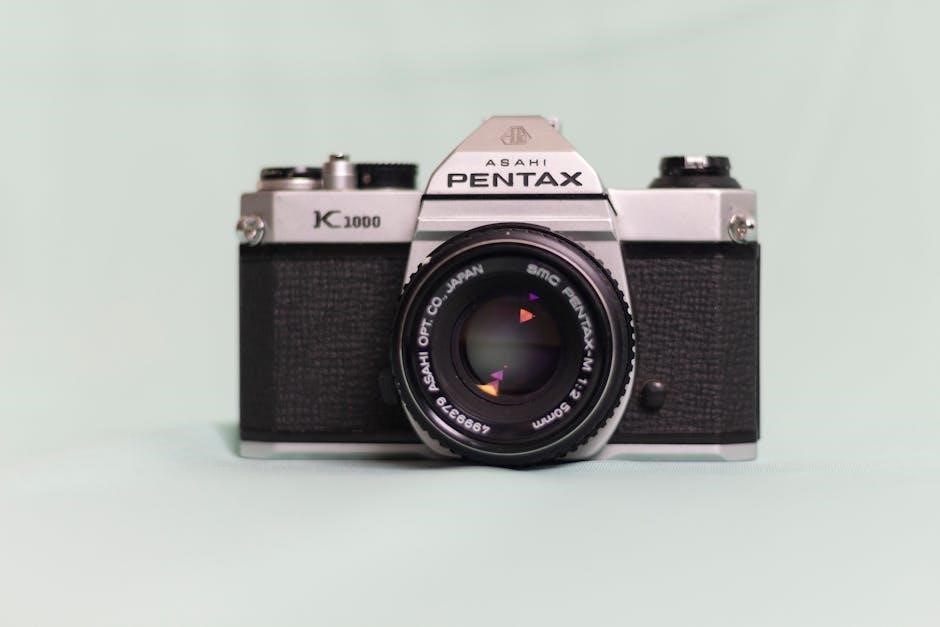
The Pentax ME Super, a classic 35mm SLR, benefits from readily available user manuals – even in PDF format. Finding resources, including service manuals, is surprisingly easy online, aiding both beginners and experienced users.
Overview of the Pentax ME Super
The Pentax ME Super is a mechanically and electronically controlled 35mm single-lens reflex camera, celebrated for its reliability and user-friendly design. Numerous online resources, including downloadable PDF manuals in multiple languages, simplify operation. It features both manual and automatic exposure modes, catering to diverse photographic styles. Its hot shoe is a key component, though contact preservation is crucial due to potential scarcity of replacements.
Historical Context and Significance
Released in 1976, the Pentax ME Super arrived during a pivotal era of SLR development, offering advanced features at a competitive price. Its user manual’s accessibility reflects its popularity. Compared to contemporaries like the Nikon FA, it presented a streamlined experience with fewer automatic modes, prioritizing simplicity for photographers.
Camera Components and Controls
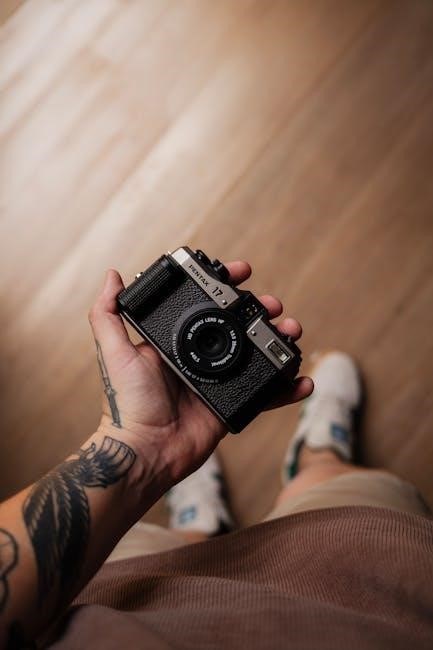
Understanding the Pentax ME Super’s body, shutter speed dial, and aperture control is key. The user manual details each function for optimal photographic control and performance.
Body and External Features
The Pentax ME Super boasts a robust, yet relatively compact, body construction. User manuals highlight the location of essential controls – the film advance lever, rewind crank, and the hot shoe. Careful attention should be paid to protecting the hot shoe contacts, as replacements can be costly and difficult to source due to the camera’s age.
Shutter Speed Dial and Operation
The Pentax ME Super’s shutter speed dial offers a range typically from 2 seconds to 1/1000th of a second. User guides emphasize careful operation to avoid accidental shifts. The camera operates electronically, meaning the dial must be set correctly for both manual and automatic exposure modes to function properly.
Aperture Control and f-Stop
Aperture control on the Pentax ME Super is lens-dependent, adjusted via the aperture ring on the mounted K-mount lens. User manuals detail how f-stop settings impact depth of field and exposure. Understanding the relationship between aperture and shutter speed is crucial for both manual and automatic operation.
Loading and Unloading Film
Pentax ME Super manuals emphasize proper film loading and rewinding techniques. Compatibility extends to various 35mm film types, ensuring versatility for photographers.
Film Type Compatibility
The Pentax ME Super is designed for standard 35mm film formats, including black and white, color negative, and slide film. Manuals confirm compatibility with ISO 25 to 3200 speed films. Users should consult their film’s data sheet for optimal settings. Proper film choice impacts image quality and exposure accuracy.
Film Loading Procedure
To load film, open the camera back and place the cassette into the film chamber. Thread the film leader onto the take-up spool, ensuring it engages properly. Advance the film a couple of frames, then close the back. The manual stresses careful threading to avoid jams and ensure correct film advance.
Film Rewinding Process
Rewinding film requires pressing the rewind release button on the camera base. Then, use the rewind crank to smoothly retract the film back into the cassette. The manual advises gentle, even pressure; avoid forcing it. Once fully rewound, open the back and remove the film cassette carefully.
Metering System and Exposure Modes
The Pentax ME Super offers both manual and automatic exposure modes. Compared to the Nikon FA, it has fewer options, simplifying operation for new users.
Understanding the Metering System
The Pentax ME Super utilizes a center-weighted metering system, prioritizing light measurement in the center of the frame. This system assists in achieving proper exposure in various lighting conditions. Users should be aware that older cameras like this may require careful attention to ensure accurate readings, especially with strong backlighting or unusual scenes. Understanding this weighting is crucial for consistent results.
Manual Exposure Mode
In manual mode, the photographer independently controls both shutter speed and aperture. This offers full creative control, but requires understanding the exposure triangle. Utilize the Pentax ME Super’s metering system as a guide, observing the needle to determine proper exposure. Practice is key to mastering manual settings for desired effects.
Automatic Exposure Mode
The Pentax ME Super’s automatic mode simplifies exposure, prioritizing shutter speed while the camera selects the appropriate aperture. Compared to cameras like the Nikon FA, it offers fewer modes. This is ideal for fast-paced shooting, though creative control over depth of field is limited in this setting.
Focusing and Viewfinder Information
The Pentax ME Super’s viewfinder provides crucial data for precise focusing and exposure. Understanding these readouts is key to achieving sharp, well-exposed photographs consistently.
Focusing Screen Details
The Pentax ME Super’s focusing screen is vital for accurate manual focusing. It typically features a split-image rangefinder and a microprism collar to aid in achieving sharpness. These elements help the photographer quickly align the image for critical focus, especially with faster lenses. Inspecting the screen for cleanliness is crucial, as dust or scratches can hinder visibility and focusing accuracy.
Viewfinder Readouts Explained
The Pentax ME Super’s viewfinder displays crucial exposure information. LEDs indicate over and under-exposure when in automatic mode, guiding aperture adjustments. A central LED confirms correct exposure. Additionally, the viewfinder shows the shutter speed selected in manual mode, aiding precise control. Understanding these readouts is key to mastering the camera’s metering system.
Depth of Field Control
The Pentax ME Super allows for precise depth of field manipulation. Adjusting the aperture (f-stop) directly impacts the area in focus. Smaller apertures (higher f-numbers) yield greater depth of field, ideal for landscapes. Larger apertures (lower f-numbers) create shallow depth of field, perfect for portraits with blurred backgrounds.

Using Lenses and Accessories
The Pentax ME Super utilizes the Pentax K-mount, offering compatibility with a wide range of lenses. Accessories like flashes and filters enhance creative possibilities.
Pentax K-Mount Lenses
The Pentax ME Super employs the renowned Pentax K-mount, a bayonet-style lens mount celebrated for its robust design and extensive compatibility. This mount allows for use with a vast selection of both Pentax-manufactured and third-party lenses. Older K-mount lenses often require manual operation, while newer lenses may offer autofocus capabilities when used with compatible Pentax bodies.
Compatible Accessories (Flash, Filters)
The Pentax ME Super readily accepts a variety of accessories to enhance photographic capabilities. Standard filters, like UV or polarizing filters, screw into the lens thread. A dedicated hot shoe allows for external flash units; however, protecting the hot shoe contacts is crucial, as replacements can be costly and difficult to source.
Troubleshooting Common Issues
Common problems with the Pentax ME Super include shutter malfunctions, metering inaccuracies, and film advance difficulties. Careful inspection and cleaning often resolve these issues.
Shutter Problems
If the Pentax ME Super’s shutter isn’t firing, check the battery compartment for corrosion, as this is a frequent cause. A slow shutter speed might indicate low batteries. Carefully examine the mechanical linkages for any obstructions or damage. Professional servicing may be needed for complex shutter repairs, potentially becoming costly due to the camera’s age.
Metering Errors
Inaccurate readings on the Pentax ME Super often stem from a weak or failing battery impacting the metering system’s functionality. Ensure the battery is fresh and properly installed. Check the film speed setting; an incorrect setting will cause exposure inaccuracies. If problems persist, professional calibration might be required.
Film Advance Issues
Difficulty advancing film on the Pentax ME Super can indicate several problems. Check for obstructions within the film chamber or around the film sprockets. A worn or damaged film advance lever or gears may require repair. Ensure the film is loaded correctly and isn’t tightly wound, hindering smooth operation.

Maintenance and Care
Regular cleaning of the Pentax ME Super’s body and careful lens storage are crucial. Protect the hot shoe contacts, as replacements can be costly and difficult to source.
Cleaning the Camera Body
To maintain your Pentax ME Super, gently wipe the exterior with a soft, dry cloth. Avoid harsh chemicals or liquids, focusing on removing dust and fingerprints. Pay attention to the film compartment and viewfinder window. Be extremely careful around the hot shoe, protecting its delicate metal contacts from damage, as replacements are challenging to find and expensive.
Lens Care and Storage
Pentax K-mount lenses require careful handling. Clean the glass elements with a lens brush and specialized cleaning solution, avoiding abrasive materials. Store lenses in a dry, dust-free environment, ideally within a protective case. Regularly check for fungus, and ensure proper capping when not in use to prevent damage and maintain optical clarity.
Battery Replacement (if applicable)
The Pentax ME Super primarily relies on a small PX28 battery for its electronic functions, like the light meter. Replacement is straightforward; access the battery compartment and ensure correct polarity during installation. Be mindful of potential corrosion and handle batteries with care, disposing of them responsibly after removal.
Advanced Techniques
Mastering the Pentax ME Super involves utilizing external light meters for precise exposure and creatively adjusting settings beyond automatic modes for artistic control.
Using External Light Meters
While the Pentax ME Super has a capable built-in meter, employing an external light meter unlocks greater precision, especially in challenging lighting. This is particularly useful for complex scenes where the camera’s meter might be fooled. External meters offer spot metering, crucial for accurate readings on specific subjects, and can be invaluable for slide film work, demanding precise exposure.
Exposure Compensation
The Pentax ME Super’s automatic modes sometimes require exposure compensation for optimal results. Bright or dark subjects can mislead the meter, leading to under or overexposure. Utilize the +/- adjustment to fine-tune exposure, ensuring accurate rendering of tones. Understanding this feature is key to mastering the camera’s automatic capabilities.
Creative Exposure Settings
Beyond automatic modes, the Pentax ME Super excels in manual control, fostering creative exploration. Experiment with different shutter speeds and apertures to achieve desired effects – motion blur, shallow depth of field, or precise focus. Mastering manual mode unlocks artistic potential, allowing personalized image creation beyond automated settings.
Specifications
The Pentax ME Super is a mechanically controlled, 35mm SLR featuring a horizontal-travel cloth focal-plane shutter and a top shutter speed of 1/2000th of a second.
Technical Specifications Overview
The Pentax ME Super operates with a mechanical shutter, offering speeds from 2 seconds to 1/2000th of a second, plus Bulb mode. It accepts Pentax K-mount lenses and features a TTL center-weighted metering system. The camera utilizes a 1/2-inch hot shoe for flash synchronization, and operates on a 4LR44/PX28 battery. Its film speed range is ISO 12-3200.
Dimensions and Weight
The Pentax ME Super is a relatively compact SLR, measuring approximately 146mm (W) x 87mm (H) x 48.5mm (D). Its lightweight design contributes to comfortable handling during extended use. The camera body weighs around 530 grams (without lens), making it portable for various photographic adventures and travel scenarios.

Resources and Further Learning
Numerous online manuals and guides exist for the Pentax ME Super, alongside active repair communities. PDF versions of the user manual are easily accessible online.
Online Manuals and Guides
Locating a Pentax ME Super user manual online is remarkably straightforward. Several websites archive PDF versions, including dedicated camera manual sites. The Internet Archive hosts a service manual too. These resources offer detailed instructions, aiding in understanding the camera’s functions and troubleshooting potential issues, benefiting both novice and seasoned photographers.
Repair Services and Communities
Given the Pentax ME Super’s age, finding repair services might prove challenging and potentially costly, especially for hot shoe contacts. Online photography communities and forums dedicated to vintage cameras are invaluable resources for advice, troubleshooting, and locating skilled technicians who can service this classic SLR.
Hot Shoe Considerations
Protect the Pentax ME Super’s hot shoe contacts; replacements are difficult to source and can be expensive due to the camera’s age.
Protecting the Hot Shoe Contacts
The delicate metal contacts within the Pentax ME Super’s hot shoe are prone to damage and are notoriously difficult to replace. Sourcing new contacts can be challenging and costly, given the camera’s vintage. Careful handling is crucial; avoid unnecessary force when attaching or detaching flash units. Consider a protective cover when the hot shoe isn’t in use to prevent dust and corrosion.
Replacement Options
Finding replacement hot shoe contacts for the Pentax ME Super presents a significant challenge due to its age. Sourcing them can be expensive, potentially exceeding the camera’s value. Repair services specializing in vintage cameras might offer solutions, but availability is limited. Careful preservation of existing contacts is the most practical approach, avoiding forceful handling.