manual stump grinder
Manual Stump Grinders: A Comprehensive Guide
Delving into the world of stump removal, this guide explores manual stump grinders, offering insights into their operation and cost-effectiveness for various landscaping needs.
What is a Manual Stump Grinder?
A manual stump grinder represents a non-motorized approach to eliminating unwanted tree stumps from properties. Unlike their gas or electric-powered counterparts, these tools rely entirely on human physical effort to operate, making them a distinctly labor-intensive option. They typically feature a rotating cutting mechanism – often teeth or blades – that is powered by hand cranks or foot pedals.
These grinders are designed for smaller stumps or situations where access to power sources is limited. While they demand significant physical exertion, manual grinders offer a quieter and more environmentally friendly alternative to powered machinery. They are often favored by individuals seeking a cost-effective solution for occasional stump removal, avoiding the expense of professional services or equipment rental. However, the process is considerably slower and more physically demanding than using powered stump grinders.
Benefits of Using a Manual Stump Grinder
Opting for a manual stump grinder presents several advantages, particularly for homeowners tackling smaller projects. A primary benefit is the elimination of fuel costs and the avoidance of engine maintenance, unlike gas-powered models. They also operate silently, minimizing noise pollution for both the user and neighbors – a significant plus in residential areas.
Furthermore, manual grinders are environmentally friendly, producing zero emissions during operation. Their lightweight and portable design allows for easy maneuverability, even in tight spaces where larger machinery can’t reach. The initial investment is generally lower compared to powered grinders or professional stump removal services. While physically demanding, they offer a satisfying sense of accomplishment and a good workout! They are ideal for occasional use and smaller stump sizes.
Types of Manual Stump Grinders
Manual stump grinders, while less common than powered versions, primarily fall into two distinct categories: hand-powered and foot-operated. Hand-powered stump grinders utilize a system of rotating blades activated by manual cranking, demanding significant physical effort from the operator. These are best suited for very small stumps or for those seeking a low-cost, simple solution.
Foot-operated stump grinders, conversely, employ a foot pedal mechanism to drive the cutting blades. This design leverages leg strength, potentially reducing strain on the arms and back compared to hand-cranked models. While still requiring physical exertion, foot-operated grinders can offer a more efficient grinding experience, particularly for medium-sized stumps. Both types rely on the user’s force to chip away at the wood, making them a slower, but eco-friendly, alternative.
Hand-Powered Stump Grinders
Hand-powered stump grinders represent the most basic form of manual stump removal technology. These devices rely entirely on the operator’s physical strength and endurance to rotate a set of cutting teeth or blades into the stump. Typically, they feature a long handle and a rotating head with hardened steel teeth designed to chip away at the wood fibers.
Due to the intense physical labor involved, hand-powered grinders are most effective on smaller stumps – generally those with a diameter of less than 12 inches. Larger stumps require substantial time and effort, making the process impractical for many users. They are often favored for their simplicity, portability, and lack of reliance on fuel or electricity, offering a quiet and environmentally friendly solution for minor stump removal tasks. However, be prepared for a workout!

Foot-Operated Stump Grinders
Foot-operated stump grinders offer a mechanical advantage over purely hand-powered models, utilizing a foot pedal system to drive the cutting action. This design allows the operator to leverage their body weight and leg strength, reducing the strain on arms and back. Typically, these grinders consist of a rotating cutting wheel or teeth housed within a protective cage, activated by a reciprocating foot pedal.
While still requiring physical exertion, foot-operated grinders can tackle slightly larger stumps than their hand-powered counterparts, potentially reaching up to 18 inches in diameter depending on the model and operator strength. They provide a more consistent and efficient cutting action, making the stump removal process less arduous. These grinders are a good middle ground, offering increased power without the need for gasoline or electricity, though they still demand considerable physical effort.

Cost Considerations for Manual Stump Grinders
Evaluating the financial aspects, manual stump grinder costs vary, with rental options ranging from $100 to $450 daily, or $60-$90 hourly.

Purchase Price Range
Determining the upfront investment for a manual stump grinder requires considering various factors, primarily the power and capabilities of the machine. While fully manual options exist, often involving hand tools and significant physical effort, these are generally less expensive. However, the provided data focuses on powered stump grinders, which, even at the lower end, represent a substantial cost.
Based on available information from October and December 2025, and January 2026, gas-powered stump grinders exhibit a wide price spectrum. A 13HP model can be found for around $80, while a more powerful 26HP grinder increases the investment to approximately $155. For larger jobs demanding greater efficiency, a 38HP or 40HP stump grinder can cost $320 or more. It’s important to note that these figures likely represent promotional or sale prices, and the actual retail cost may differ.
Furthermore, the specific retailer and any included accessories will influence the final purchase price. Considering the labor-saving benefits of a powered grinder versus the intensive effort of a purely manual approach, the investment can be justified for frequent or large-scale stump removal projects.
Rental Costs: Daily Rates
For those requiring stump removal on a one-off basis, or lacking the storage space for ownership, renting a stump grinder presents a viable solution. Daily rental rates, however, demonstrate considerable variability, influenced by factors such as grinder size, power, and regional demand. Examining data from late 2025 and early 2026 reveals a typical daily rental range of $100 to $400.
Several sources converge on an average daily cost of around $300, though prices can dip as low as $90 in certain locations or for smaller, less powerful machines. Conversely, more robust grinders capable of tackling larger stumps may command rental fees approaching $400 per day. Sunbelt Rentals also offers options, though specific daily rates aren’t explicitly stated in the provided snippets.
It’s crucial to factor in potential additional charges, such as delivery fees or insurance, when calculating the total daily cost. Comparing quotes from multiple rental companies is highly recommended to secure the most competitive rate.
Rental Costs: Hourly Rates
Alongside daily rates, many rental companies offer stump grinders on an hourly basis, catering to projects requiring only a few hours of operation. While less common than daily rentals, hourly rates can be a cost-effective option for smaller jobs or when precise time estimation is possible. Information gathered from late 2025 and early 2026 indicates hourly rates generally fall between $60 and $90.
This pricing structure allows for granular control over expenses, avoiding the commitment of a full-day rental if the task can be completed swiftly. However, it’s essential to accurately assess the time needed, as exceeding the estimated hours will incur additional charges. Some providers may impose a minimum rental duration, even when opting for hourly billing.
Considering the potential for unexpected delays, it’s prudent to pad the hourly estimate slightly. Always inquire about any applicable minimums or overtime fees before finalizing the rental agreement.
Factors Influencing Rental Prices
Several key elements dictate the cost of renting a manual stump grinder, extending beyond the basic model. Grinder size and power are primary drivers; larger, more powerful machines capable of tackling substantial stumps command higher rental fees, ranging significantly from $90 to $400 per day. Rental duration also plays a crucial role, with longer rentals often qualifying for discounted daily rates.
Location and availability significantly impact pricing. Demand in metropolitan areas or during peak landscaping seasons (like spring and fall) typically leads to increased costs. Remote locations may incur delivery charges, adding to the overall expense. Furthermore, the specific type of grinder—gas versus electric—can influence the price, with gas-powered models generally being more expensive to rent.
Finally, insurance requirements and included accessories (like safety gear) can also affect the final rental cost.
Grinder Size and Power
The correlation between grinder size, power, and rental cost is substantial. Smaller, hand-powered or foot-operated manual stump grinders, suitable for minor stump removal tasks, naturally have lower rental rates. Conversely, larger, gas-powered models – boasting 13HP, 26HP, 38HP, or even 40HP – designed for tackling substantial tree stumps, command significantly higher prices.
Increased horsepower translates directly to greater grinding efficiency and the ability to process larger diameter stumps more quickly. This enhanced capability justifies the increased rental expense. Renters should carefully assess the size of the stumps they intend to remove and select a grinder with adequate power to avoid prolonged rental periods and potential frustration.
Generally, expect to pay a premium for grinders capable of handling stumps exceeding 12 inches in diameter.
Rental Duration
Rental duration profoundly impacts the overall cost of a manual stump grinder. While hourly rates offer flexibility for short projects, daily rates often prove more economical for tasks requiring extended grinding time. Numerous sources indicate daily rental costs range from $100 to $450, with hourly rates typically falling between $60 and $90.
However, exceeding the estimated rental period can quickly escalate expenses. Carefully assess the scope of the stump removal project and realistically estimate the time required for completion. Consider potential delays due to unforeseen obstacles, such as rocks or extensive root systems.
Many rental companies offer weekly rates, providing substantial savings for larger-scale projects. Comparing daily, hourly, and weekly rates is crucial to securing the most cost-effective rental agreement.
Location and Availability
Geographical location significantly influences manual stump grinder rental prices and availability. Demand fluctuates based on regional landscaping needs and seasonal factors. Metropolitan areas generally exhibit higher rental costs compared to rural locations due to increased demand and operational expenses for rental businesses.
Availability can also vary considerably. Popular rental items, like stump grinders, may be reserved weeks in advance, particularly during peak landscaping seasons. Checking availability with multiple rental companies is advisable to secure the desired equipment when needed.
Transportation costs should also be factored into the overall expense. Renters are often responsible for transporting the grinder to and from the rental location. Consider the distance and vehicle requirements when comparing rental options. Online rental platforms often display availability and location information, streamlining the search process.
Operating a Manual Stump Grinder: Safety First
Prioritizing safety is paramount when using a manual stump grinder; proper gear, pre-operation checks, and careful techniques are crucial for preventing injuries.
Essential Safety Gear
When operating a manual stump grinder, comprehensive safety gear is non-negotiable to mitigate potential hazards. Robust eye protection, such as safety glasses or a face shield, is vital to shield against flying debris generated during the grinding process. Hearing protection, like earplugs or earmuffs, is equally important, as these machines can produce significant noise levels.
Durable work gloves provide a secure grip and protect hands from abrasions and potential impacts. Sturdy, closed-toe footwear, preferably work boots with ankle support, is essential for maintaining stability and protecting feet from falling objects. Long pants and a long-sleeved shirt offer additional protection against scratches and flying debris.
Finally, consider wearing a dust mask or respirator, especially in dry conditions, to avoid inhaling wood dust. Regularly inspect all safety gear for damage and ensure a proper fit before each use. Remember, prioritizing personal protective equipment is a fundamental aspect of safe stump grinding.
Pre-Operation Checklist
Before initiating operation of a manual stump grinder, a thorough pre-operation checklist is crucial for ensuring both safety and efficient performance. Begin by carefully inspecting the work area, removing any rocks, debris, or obstructions that could pose a hazard or interfere with the grinding process. Confirm the presence and proper functioning of all safety guards and shields.
Next, meticulously examine the grinder itself, checking for loose bolts, damaged components, or any signs of wear and tear. Verify that all moving parts are properly lubricated and operate smoothly. Ensure the grinding wheel or teeth are securely attached and in good condition.
Finally, review the manufacturer’s instructions and familiarize yourself with the grinder’s controls and operating procedures. Always double-check that the area is clear of bystanders and pets before starting the machine. A diligent pre-operation check minimizes risks and maximizes productivity.
Safe Grinding Techniques
Employing correct techniques is paramount when operating a manual stump grinder. Maintain a firm and stable stance, ensuring a secure grip on the grinder’s handles. Initiate grinding slowly, allowing the machine to gradually bite into the stump. Avoid applying excessive force, as this can lead to kickback or loss of control.
Work in controlled passes, systematically removing material from the stump. Never reach over or around the rotating grinding components. Be mindful of flying debris and maintain a safe distance. Regularly inspect the stump for hidden obstacles like nails or rocks, which could damage the grinder or cause injury.
If the grinder becomes stuck, immediately stop the machine and carefully assess the situation before attempting to free it. Always prioritize safety and follow the manufacturer’s guidelines for optimal and secure operation.

Maintenance and Care
Consistent upkeep ensures longevity and optimal performance of your manual stump grinder; regular cleaning, blade sharpening, and proper storage are vitally important.
Cleaning and Storage
Thorough cleaning after each use is paramount for maintaining a manual stump grinder’s efficiency and preventing corrosion. Remove all wood chips, dirt, and debris from the grinding wheel, housing, and engine components. A stiff brush and compressed air are invaluable tools for this process. Inspect for any damage during cleaning, addressing issues promptly.
Proper storage significantly extends the grinder’s lifespan. Store the unit in a dry, covered area, shielded from the elements. If storing for an extended period, consider applying a rust preventative to metal parts. Disconnect the spark plug wire to prevent accidental starting. Ensure the fuel tank is either emptied or stabilized with a fuel preservative to avoid fuel degradation. Covering the grinder with a tarp provides an extra layer of protection against dust and moisture, ensuring it’s ready for the next task.
Blade Sharpening and Replacement
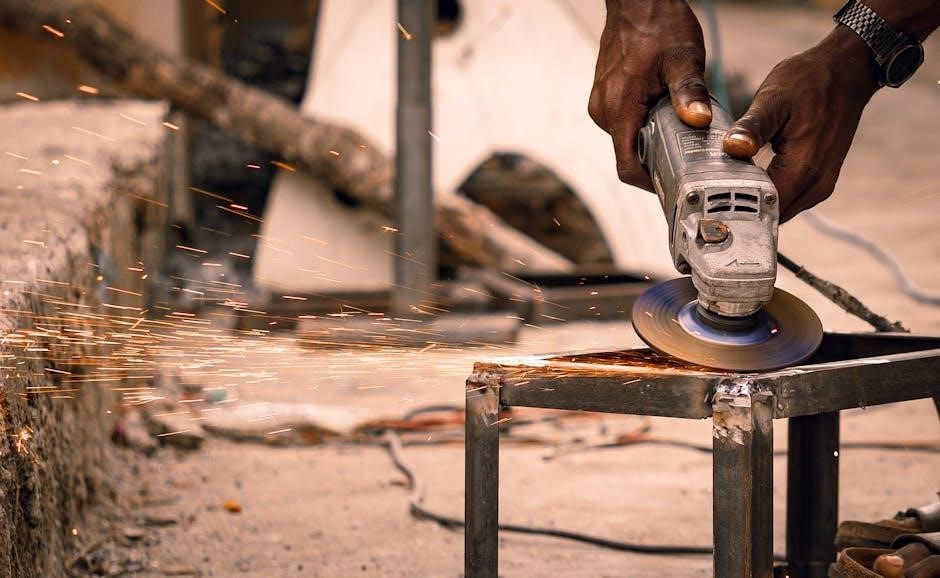
Maintaining sharp blades is crucial for efficient stump grinding and minimizing strain on the machine. Regularly inspect blades for dullness, chips, or cracks. Sharpening can often be done with a metal file or a dedicated blade sharpening tool, following the manufacturer’s instructions carefully to preserve the blade’s angle.
When blades become excessively worn or damaged, replacement is necessary. Always use replacement blades specifically designed for your model of manual stump grinder. Disconnect the power source before attempting blade replacement. Securely fasten new blades, ensuring they are properly aligned and tightened to the manufacturer’s specifications. Improperly installed blades can be dangerous and reduce grinding performance. Consider professional sharpening or replacement if you lack experience, prioritizing safety and optimal functionality.