
new muslim guide
Welcome to Islam: A New Muslim Guide
Embarking on this spiritual journey requires understanding core beliefs‚ practices‚ and resources; this guide offers a foundational introduction to the Islamic faith for newcomers.
Understanding the Core Beliefs
Central to Islam is the belief in one God‚ Allah‚ the all-powerful and all-knowing creator and sustainer of the universe. This concept‚ known as Tawhid‚ is the foundation of the faith‚ rejecting any form of polytheism or idolatry. Muslims believe Allah sent prophets throughout history to guide humanity‚ including Adam‚ Noah‚ Abraham‚ Moses‚ and Jesus (peace be upon them all).
However‚ Muhammad (peace be upon him) is considered the final prophet‚ delivering Allah’s complete and final message. Belief in the angels‚ divine books (including the Torah‚ Psalms‚ Gospel‚ and Quran)‚ and the Day of Judgment are also fundamental. The Quran is believed to be the literal word of God‚ revealed to Muhammad through the angel Gabriel‚ offering guidance for all aspects of life. Accepting these core beliefs is the first step in embracing Islam.
The Five Pillars of Islam
The Five Pillars are the core practices of Islam‚ providing a framework for worship and a path to spiritual growth. First is the Shahada‚ the declaration of faith – affirming that there is no god but Allah‚ and Muhammad is His messenger. Second is Salat‚ performing ritual prayers five times daily‚ connecting with God and fostering discipline.
Third is Zakat‚ giving charity to the needy‚ promoting social justice and compassion. Fourth is Sawm‚ fasting during the month of Ramadan‚ cultivating self-restraint and empathy. Finally‚ Hajj‚ making a pilgrimage to Mecca (if able)‚ uniting Muslims globally. These pillars are not merely rituals‚ but expressions of devotion and submission to Allah.
Shahada: Declaration of Faith
The Shahada‚ the fundamental statement of Islam‚ is a simple yet profound declaration: “La ilaha illallah‚ Muhammadur Rasulullah” – meaning “There is no god but Allah‚ and Muhammad is the Messenger of Allah.” This testimony forms the cornerstone of a Muslim’s belief‚ signifying complete submission to the one God‚ Allah.
Reciting the Shahada with sincerity and understanding is the entry point into Islam. It’s not merely a verbal affirmation‚ but a commitment to live by the teachings of Islam and follow the example of Prophet Muhammad (peace be upon him). Accepting this declaration wholeheartedly shapes a Muslim’s worldview and purpose in life‚ guiding their actions and intentions.

Salat: The Importance of Prayer
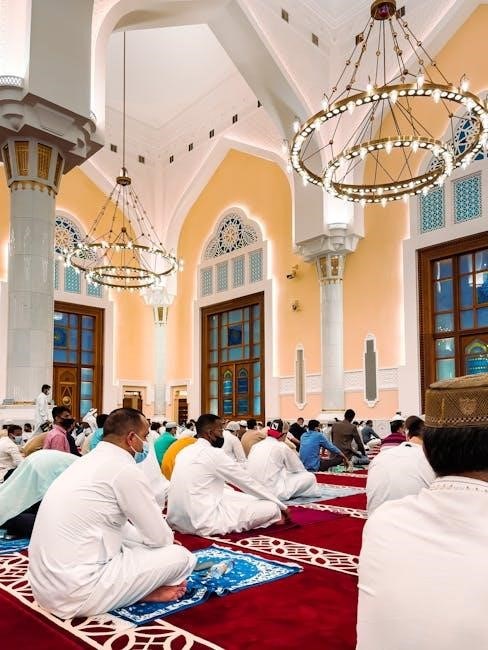
Salat‚ or prayer‚ is one of the Five Pillars of Islam and a direct connection between a Muslim and Allah. Performed five times daily – at dawn (Fajr)‚ noon (Dhuhr)‚ afternoon (Asr)‚ sunset (Maghrib)‚ and night (Isha) – Salat is a ritual purification and spiritual discipline.
It involves specific physical postures‚ recitations from the Quran‚ and heartfelt supplications. Prayer isn’t simply a routine; it’s a remembrance of Allah‚ a seeking of guidance‚ and a source of strength. Salat fosters humility‚ discipline‚ and gratitude‚ reminding Muslims of their dependence on God throughout the day. Consistent prayer cultivates a deeper spiritual awareness and strengthens faith.
Zakat: The Practice of Charity
Zakat‚ the obligatory charitable giving‚ is a cornerstone of Islamic social justice and another of the Five Pillars. It’s not merely an act of generosity‚ but a recognized right of the poor and needy within the community. Calculated as 2.5% of one’s accumulated wealth exceeding a minimum threshold (nisab)‚ Zakat purifies wealth and fosters economic equity.
The funds collected are distributed to specific categories of recipients‚ including the poor‚ the indebted‚ those struggling to convert or reconcile with Islam‚ and those in need. Zakat cultivates empathy‚ reduces social disparities‚ and strengthens the bonds of community. It’s a powerful reminder of shared responsibility and the importance of caring for others.
Sawm: The Significance of Fasting During Ramadan
Sawm‚ or fasting during the month of Ramadan‚ is a deeply spiritual practice and the fourth pillar of Islam. From dawn until sunset‚ Muslims abstain from food‚ drink‚ and other physical needs‚ fostering self-discipline‚ empathy for the less fortunate‚ and increased devotion to God. It’s a time for heightened prayer‚ reflection‚ and strengthening one’s relationship with the Divine.
Ramadan isn’t simply about deprivation; it’s about spiritual purification and mindful living. It encourages increased charity‚ kindness‚ and community engagement. Breaking the fast each evening (iftar) is often a communal event‚ strengthening family and social ties. Sawm culminates in Eid al-Fitr‚ a joyous celebration marking the end of the month.
Hajj: The Pilgrimage to Mecca
Hajj‚ the pilgrimage to Mecca‚ is the fifth pillar of Islam and a profoundly significant journey for Muslims‚ if physically and financially able. It’s a once-in-a-lifetime obligation‚ undertaken during a specific time each year‚ involving a series of rituals performed over several days in and around the holy city.
These rituals commemorate the trials and triumphs of Prophet Ibrahim (Abraham) and his family‚ symbolizing submission to God’s will and unity among Muslims worldwide. Pilgrims circle the Kaaba‚ a sacred structure‚ engage in prayer‚ and travel between the hills of Safa and Marwa. Hajj is a deeply transformative experience‚ fostering spiritual growth and a sense of global Muslim brotherhood and sisterhood.

The Holy Quran and its Role
The Quran‚ considered the literal word of God‚ guides Muslims in all aspects of life‚ offering wisdom and direction for a fulfilling existence.
Reading and Understanding the Quran
Beginning your journey with the Quran involves consistent reading and a sincere desire to comprehend its message. Start with translation to grasp the general meaning‚ then delve deeper into interpretations (tafsir) by reputable scholars.
Understanding the historical context of revelations is crucial; knowing when and why verses were revealed provides valuable insight. Recitation‚ even without full comprehension‚ is highly rewarded‚ fostering a connection with the divine.
Numerous resources‚ including online platforms and study groups‚ can aid in your understanding. Don’t hesitate to seek guidance from knowledgeable individuals within the Muslim community. Internalizing the Quran’s teachings requires reflection and application to daily life‚ striving to embody its ethical principles.
Importance of Quranic Recitation
Quranic recitation‚ or tilawah‚ holds immense spiritual significance in Islam‚ even if full comprehension isn’t immediately present. Each letter recited is rewarded by Allah‚ fostering a direct connection with the divine word. Regular recitation purifies the heart‚ brings tranquility‚ and illuminates the mind.
Striving for correct pronunciation (tajwid) enhances the beauty and reverence of the recitation. Listening to skilled reciters can serve as a valuable learning tool.

Recitation isn’t merely a ritual; it’s an act of worship and contemplation. Reflecting upon the meaning of the verses while reciting deepens understanding and strengthens faith. Make it a daily habit‚ even starting with small portions‚ to reap its profound benefits and draw closer to Allah.

Sunnah: Following the Prophet Muhammad (PBUH)
The Sunnah embodies the Prophet’s (PBUH) teachings‚ actions‚ and approvals‚ serving as a vital guide for Muslims alongside the Quran‚ enriching daily life.
The Meaning of Sunnah
The Sunnah‚ in its essence‚ represents the exemplary conduct of Prophet Muhammad (peace be upon him)‚ encompassing his words‚ deeds‚ tacit approvals‚ and even his character traits. It’s a comprehensive way of life‚ offering practical guidance on navigating all aspects of existence‚ from worship and ethics to social interactions and personal conduct.
Understanding the Sunnah is crucial for Muslims as it clarifies and elaborates upon the general principles outlined in the Quran. It provides detailed instructions and practical examples‚ enabling believers to fully implement Islamic teachings in their lives. The Sunnah isn’t a separate revelation‚ but rather an explanation and demonstration of the divine message received by the Prophet.
For new Muslims‚ embracing the Sunnah signifies a commitment to following the complete path of Islam‚ striving to emulate the Prophet’s noble example in all endeavors. It’s a continuous process of learning‚ reflection‚ and implementation‚ fostering a deeper connection with faith and a more fulfilling spiritual life.
Authentic Sources of Hadith
Hadith‚ narrations detailing the Prophet Muhammad’s (PBUH) Sunnah‚ are meticulously categorized based on their authenticity; For new Muslims‚ discerning reliable sources is paramount. The most highly regarded collections are Sahih al-Bukhari and Sahih Muslim‚ compiled by scholars renowned for their rigorous scrutiny of narrators and chains of transmission (isnad).
These collections underwent decades of verification‚ ensuring the accuracy and reliability of each Hadith. Other respected sources include Sunan Abu Dawood‚ Sunan al-Tirmidhi‚ Sunan al-Nasa’i‚ and Sunan Ibn Majah.
Studying Hadith requires guidance from knowledgeable scholars to understand context and avoid misinterpretations. Online resources and reputable books can aid this process‚ providing access to translated and annotated Hadith collections‚ fostering a deeper understanding of the Prophet’s teachings and practices.

Islamic Ethics and Morality
Islam emphasizes strong moral principles‚ including honesty‚ kindness‚ justice‚ and respect for all; these values guide Muslims in all aspects of life.
Core Islamic Values
At the heart of Islam lie fundamental values that shape a Muslim’s worldview and conduct. Tawhid (the oneness of God) is paramount‚ influencing all beliefs and actions. Alongside this‚ amanah (trustworthiness) is highly valued‚ demanding honesty in dealings and fulfilling commitments.
Adl (justice) requires fairness and equity in all interactions‚ while ihsan (excellence) encourages striving for the best in worship and character. Sabr (patience) is crucial in facing life’s challenges with resilience‚ and shukr (gratitude) fosters appreciation for blessings.
Respect for parents‚ upholding family ties‚ and showing compassion to all creation are also central tenets. These values‚ rooted in the Quran and Sunnah‚ provide a moral compass for Muslims‚ guiding them towards a righteous and fulfilling life‚ and fostering a harmonious society.
Modesty and Decorum in Islam
Islam places significant emphasis on modesty and proper decorum in all aspects of life. This encompasses both dress and behavior‚ aiming to safeguard dignity and foster respectful interactions. For both men and women‚ covering the awrah (private parts) is essential‚ with specific guidelines for clothing.
Modesty extends beyond appearance to include speech‚ avoiding gossip‚ backbiting‚ and harsh language. Maintaining respectful eye contact and interactions with members of the opposite gender‚ outside of close family‚ is also encouraged.
Good manners‚ humility‚ and kindness are highly valued‚ reflecting a sincere desire to please God and build positive relationships. These principles contribute to a virtuous character and a harmonious community‚ embodying the beauty and grace of Islamic teachings.
Daily Life as a Muslim
Integrating Islamic principles into everyday routines—from dietary choices and greetings to ethical conduct—shapes a fulfilling life guided by faith and devotion.
Dietary Guidelines (Halal and Haram)
Islam provides specific guidelines regarding permissible (halal) and prohibited (haram) foods‚ impacting a Muslim’s daily life significantly. Halal foods are those considered lawful according to Islamic law‚ encompassing most foods but with specific stipulations. For instance‚ all meat must be slaughtered according to Islamic rituals‚ ensuring humane treatment and proper drainage of blood.

Conversely‚ haram foods are forbidden. Pork and its derivatives are strictly prohibited‚ as are animals not slaughtered Islamically‚ and intoxicating substances like alcohol. Gelatin‚ if derived from non-halal animals‚ is also considered haram.
Muslims are encouraged to be mindful of the source of their food and to prioritize halal options whenever available. This dietary adherence isn’t merely about avoiding specific items‚ but about cultivating a conscious and grateful relationship with sustenance‚ recognizing it as a blessing from God.
Islamic Greetings and Etiquette
Islamic etiquette‚ rooted in respect and compassion‚ shapes interactions among Muslims and with others. The traditional greeting‚ “Assalamu Alaikum” (peace be upon you)‚ fosters a sense of brotherhood and goodwill. Responding with “Wa Alaikum Assalam” (and upon you be peace) completes this exchange.
Beyond greetings‚ Islamic etiquette emphasizes humility‚ kindness‚ and consideration. Respect for elders is paramount‚ and seeking permission before entering someone’s home is customary. Maintaining modest dress and speech are also valued.
When dining‚ it’s polite to eat with the right hand and avoid wasting food. Showing gratitude for hospitality is essential. These practices‚ reflecting the Prophet Muhammad’s (PBUH) teachings‚ aim to cultivate a harmonious and respectful community‚ embodying the beauty of Islamic values in everyday life.

Resources for New Muslims
Explore recommended books‚ reliable websites‚ and connect with a supportive local Muslim community to deepen your understanding and faith journey.
Recommended Books and Websites
For beginners seeking a solid foundation‚ “A Simple Guide to Islam” provides accessible explanations of core beliefs and practices. Delving deeper‚ “The Clear Quran” offers a readable translation with helpful commentary‚ aiding comprehension of the divine text. Websites like IslamQA.info present answers to frequently asked questions‚ addressing diverse concerns with scholarly insights.
Additionally‚ explore MuslimMatters.org for contemporary articles and discussions on relevant topics. Understanding the Prophet’s life is crucial; therefore‚ consider reading “The Sealed Nectar‚” a biography of Muhammad (PBUH). Remember to prioritize authentic sources and consult with knowledgeable individuals when navigating online resources. These materials will empower you on your path of learning and spiritual growth within Islam.
Finding a Local Muslim Community
Connecting with a local Masjid (mosque) is invaluable for new Muslims‚ offering a supportive environment for learning and growth. Mosques often host introductory classes‚ allowing you to deepen your understanding of Islam and ask questions in a safe space. Seek out community events and gatherings to build relationships with fellow Muslims‚ fostering a sense of belonging.
Furthermore‚ online directories and social media groups can help locate mosques and Islamic centers in your area. Don’t hesitate to reach out and introduce yourself; most communities warmly welcome newcomers. Participating in communal prayers‚ attending lectures‚ and volunteering are excellent ways to integrate and benefit from the collective wisdom and support of the Ummah (global Muslim community).